Why AI image detection matters: the dangers of AI-generated images
The dangers of AI-generated images are fake news photos, scams with fake proof, sexual deepfakes, real photos called fake and artists undercut or accused.
14 min read
On this page
After the 2024 Met Gala, Katy Perry's mother texted her about her gown (NPR, May 2024). Perry posted the exchange on Instagram (NPR). "Didn't know you went to the Met," her mother wrote, though Perry hadn't gone (NPR). The photos were made with AI, and Perry's reply was "Lol mom the AI got you too" (NPR, May 2024).
That's the small version of the problem, and the scale is new. In about the first week after ChatGPT's image update in March 2025, people made more than 700 million images with it, said Brad Lightcap, who runs day-to-day operations at OpenAI (TechCrunch). In two studies of AI faces, people did about as well as a coin toss or worse (PNAS, 2022; University of Reading, 2025; Table 6). So a fake can cost someone money or their dignity, and a real photo can be waved away as "AI". That's why detecting AI in images matters now.
What are the dangers of AI-generated images?
AI-generated images cause five kinds of harm: fake news photos, scams that fake the proof, sexual deepfakes of real people, doubt about real evidence and confusion over who made a piece of work. The first two only work if someone takes a picture at face value, so checking where it came from is what breaks them. With sexual deepfakes the harm comes even when people know the picture is fake, so reporting it is what counts (Table 7). The last two also run the other way, where real things get doubted because fakes exist.
| Danger | What it looks like | A real case |
|---|---|---|
| Fake news photos | An invented event shared as news | A fake Pentagon "explosion" image, apparently AI-made, and a brief stock market dip (NPR, May 2023) |
| Scams | AI pictures used as proof | A fake Brad Pitt romance backed by AI photos of him in a hospital bed (BBC, Jan 2025) |
| Sexual deepfakes | Explicit fakes of real people | Explicit AI images of Taylor Swift (The Star, Jan 2024) |
| Doubt about evidence | Fakes filed in court, real photos called AI | Deepfake videos filed as evidence in a California lawsuit (NBC News, Nov 2025) |
| Creators and copyright | AI images entered against artists, real work called AI | An AI image won first place at a state fair art contest (CBS, Sep 2022) |
How do fake AI images spread misinformation?
They can reach millions of people within days (The Washington Post via ADN), and some keep working after they've been exposed (NBC News).
During the Los Angeles fires in January 2025, people kept texting Jeff Zarrinnam fake pictures of the Hollywood sign on fire, some of them made with AI (NPR). He chairs the Hollywood Sign Trust and could see the real sign from his office (NPR). "They look so real that I couldn't tell if it was real or not," he told NPR, and if he hadn't seen the sign with his own eyes he "would have probably believed" them (NPR, January 2025).
News outlets get caught as well. After the Afghanistan earthquake of August 31, 2025, five big UK news outlets illustrated it with images that were very likely made with AI, and all five took them down after the fact-checkers at Full Fact got in touch (Full Fact, September 2025). Reuters works backwards from the photo: it looks for the person who took it, checks the details saved inside the file (its metadata) and compares the scene with weather records and satellite pictures (Reuters explainer, August 2026). The Associated Press says it won't send out AI images that are suspected or proven to be false (AP standards, checked November 2026).
| Image | When | What happened |
|---|---|---|
| Pope Francis in a white puffer jacket | Mar 2023 | Fooled a lot of people on Twitter (NBC News) |
| Donald Trump being arrested | Mar 2023 | Made by Eliot Higgins, who said in his posts that he was making them; they drew nearly 5 million views in two days, and others reposted them as real (The Washington Post via ADN) |
| Trump with Black voters on a porch | Mar 2024 | First posted by a satirical account, then recaptioned as real; over 1.3 million views on X. The BBC found dozens of such images made by supporters and no evidence linking them to his campaign (BBC) |
| A child with a puppy in Hurricane Helene floodwater | Oct 2024 | A party official kept it up after it was shown to be AI, saying "it doesn't matter" where it came from (NBC News) |
| Nicolás Maduro after his capture | Jan 2026 | Images of him that were likely made or edited with AI drew millions of views. Google's SynthID tool showed one widely shared photo was likely made or edited with Google AI, and CBS warned that detection tools can be inconsistent (CBS News) |
Across the markets the Reuters Institute surveys, 58% of people worry about telling what's real from what's fake in online news, and in the US it's 73% (Digital News Report 2025).
How do scammers use AI-generated images?
They use them to fake the proof: a face, the damage or an ID.
A woman in France, called Anne in the reports, sent €830,000 to scammers posing as Brad Pitt (BBC). When they asked for money for his kidney cancer treatment, they sent her several AI-made photos of "Pitt" in a hospital bed (BBC). She checked them, in a way. "I looked those photos up on the internet but couldn't find them so I thought that meant he had taken those selfies just for me," she told French TV (BBC, January 2025).
That's the trap with a search that finds nothing. An image an AI made yesterday has no earlier copies anywhere, so finding none proves nothing about it.
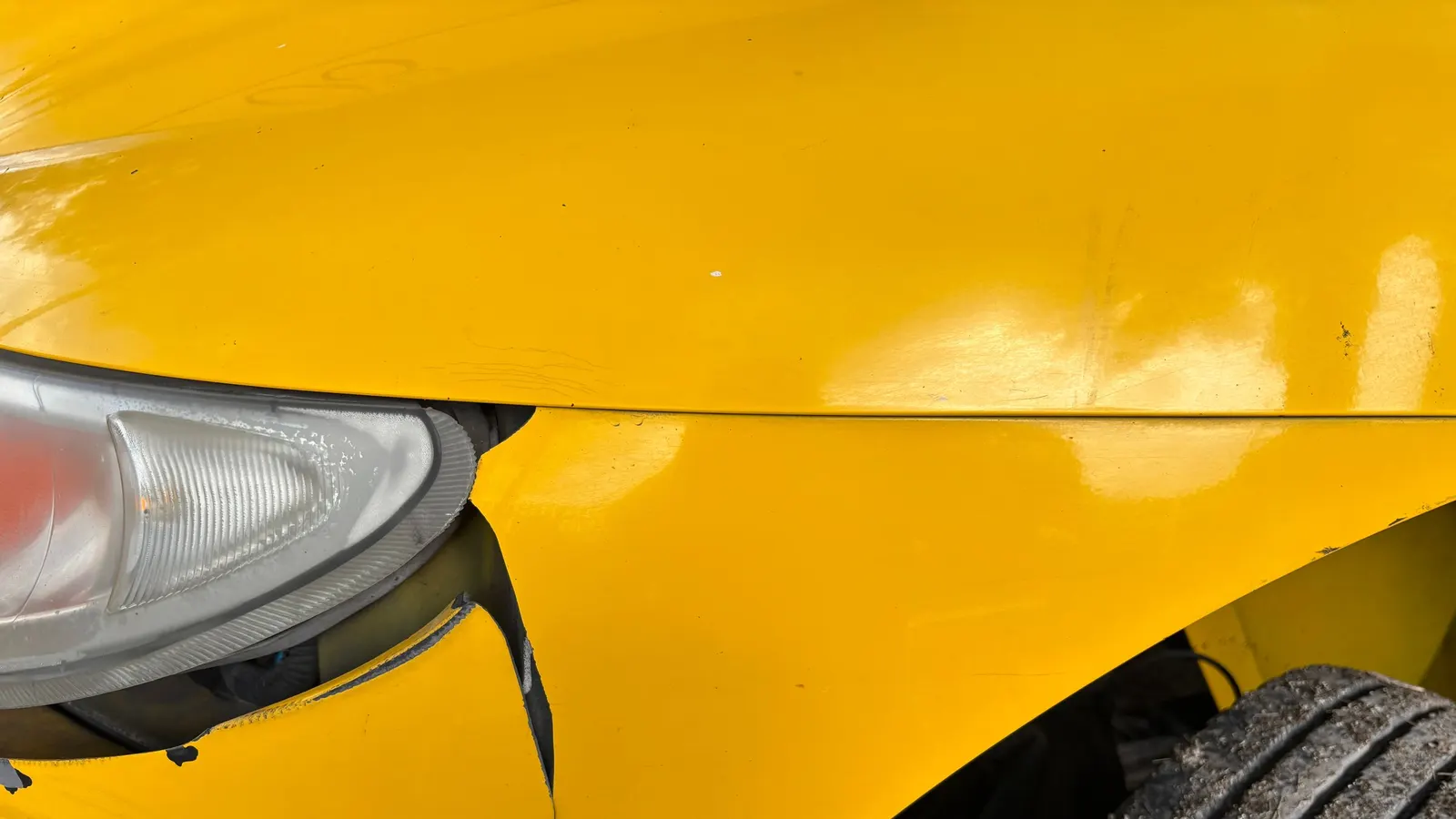
Allianz UK says it sees the same trick on vehicles. In one case it describes, a van owner's photo was taken from his business's social media page, and fraudsters added a cracked bumper through AI photo editing and filed a claim for an accident that never happened, with a fake repair invoice of about £1,000 (Allianz UK, June 2026).
| Case | What the image faked | What happened |
|---|---|---|
| An Airbnb rental, alleged (The Guardian, Aug 2025) | Damage to a coffee table | The host claimed more than £12,000; Airbnb said it couldn't verify the photos and refunded the guest |
| OnlyFake (404 Media; US Justice Department) | Photos of ID documents, $15 each, from a site that said it used AI | One passed a crypto exchange's ID check; the creator pleaded guilty to selling more than 10,000 (the DOJ release doesn't mention AI) |
| Refund-only claims (China Daily, Dec 2025) | Spoiled food | Small online shops got AI-altered photos from buyers asking for refunds |
| Flower seeds (404 Media, Jun 2026) | Flowers that don't exist | Seeds sold with AI product photos |
FinCEN, the US Treasury's financial crimes office, warned banks in November 2024 about a rise in reports of deepfake media, often fake identity documents made to get past ID checks (FinCEN alert). The FBI's 2025 report counted 22,364 complaints that mentioned AI in any way, with $893 million in reported losses (FBI Internet Crime Report 2025).
Why are deepfakes dangerous?
Because the harm lands on a real person whether or not anyone believes the picture.
In January 2024, sexually explicit AI images of Taylor Swift spread on X, and one was seen 47 million times before it was taken down (The Star, January 2024).
| Case or survey | What was found |
|---|---|
| Beverly Hills middle school (NBC News, Mar 2024) | Five students expelled after AI nude images of 16 classmates |
| US high schools, 2023-24 (CDT) | 15% of students knew of AI-made intimate images of people at their school |
| Grok on X (Reuters, Jan 2026) | 102 requests in ten minutes to edit photos of people into minimal clothing; fully done in at least 21. Ofcom then opened an investigation |
| Child abuse imagery (IWF, 2025) | 4,586 of the 449,298 images the Internet Watch Foundation recorded were AI-made, about 1% |
| US teens (Common Sense Media, 2026) | 67% fear being deepfaked; 23% of those worried now post fewer photos of themselves |
Are deepfakes illegal?
Sexual ones can be, under the laws in Table 5 for the US and for England and Wales. Under the Sexual Offences Act 2003, sharing one was already an offense (GOV.UK).
| Where | What the law says | Since |
|---|---|---|
| US, TAKE IT DOWN Act | Knowingly publishing a sexual deepfake of an identifiable adult online without consent, meant to cause or causing harm: up to 2 years in prison. Minors are a separate offense, up to 3 years | May 19, 2025 |
| US online platforms, same Act (FTC) | Remove a reported intimate image, real or AI-made, within 48 hours; up to $53,088 per violation (FTC guidance) | Enforced from May 19, 2026 |
| England and Wales (legislation.gov.uk) | Creating a sexual deepfake of an adult without consent | Feb 6, 2026 |
Can a photo still be trusted as evidence?
Less than before. Fakes get filed in court (NBC News), and real photos get called fake (NPR).
In September 2025 a judge in Alameda County, California, threw out a lawsuit, Mendones v. Cushman & Wakefield, after finding that the plaintiffs had submitted deepfake videos and altered images as real evidence (NBC News; the order, quoted by Reason). US federal judges drafted a rule for deepfake evidence and then put it on hold in May 2026 (US Courts).
In August 2024, Donald Trump said a photo of the crowd at Kamala Harris's rally in Detroit was AI-made and that the crowd didn't exist (NPR). A campaign staffer had taken it, and Hany Farid, a professor who studies image forensics, found no sign of AI (NPR). "This is a photo of an event in one city on one day," he said (NPR, August 2024).
What is the liar's dividend?
It's the benefit politicians and other public figures caught on real evidence get from calling that evidence fake (American Political Science Review). In survey experiments with more than 15,000 US adults, researchers showed people real scandal stories about real US politicians, each followed by a made-up reply from the politician saying the story was fake (APSR). Across party lines, crying "fake" raised support against written reports and mostly failed against video, and photos weren't tested (American Political Science Review).
It turns up outside politics too. Tesla's lawyers suggested that a 2016 video of Elon Musk speaking might be a deepfake, and the judge called that "deeply troubling" (NPR, 2023). Some Iranian diaspora opposition accounts called a real photo of graves in Minab AI-made before it was verified (Carnegie Endowment, 2026).
Detectors don't always help. In October 2023 a free AI detector labeled a war photo as AI-made, though Hany Farid found no sign of AI in it (404 Media).
Can AI-generated images be copyrighted?
In the US, not without a human author (DC Circuit, March 2025). Creators get squeezed from both sides: AI images compete with their work (CBS), and their own work gets accused of being AI (Kotaku).
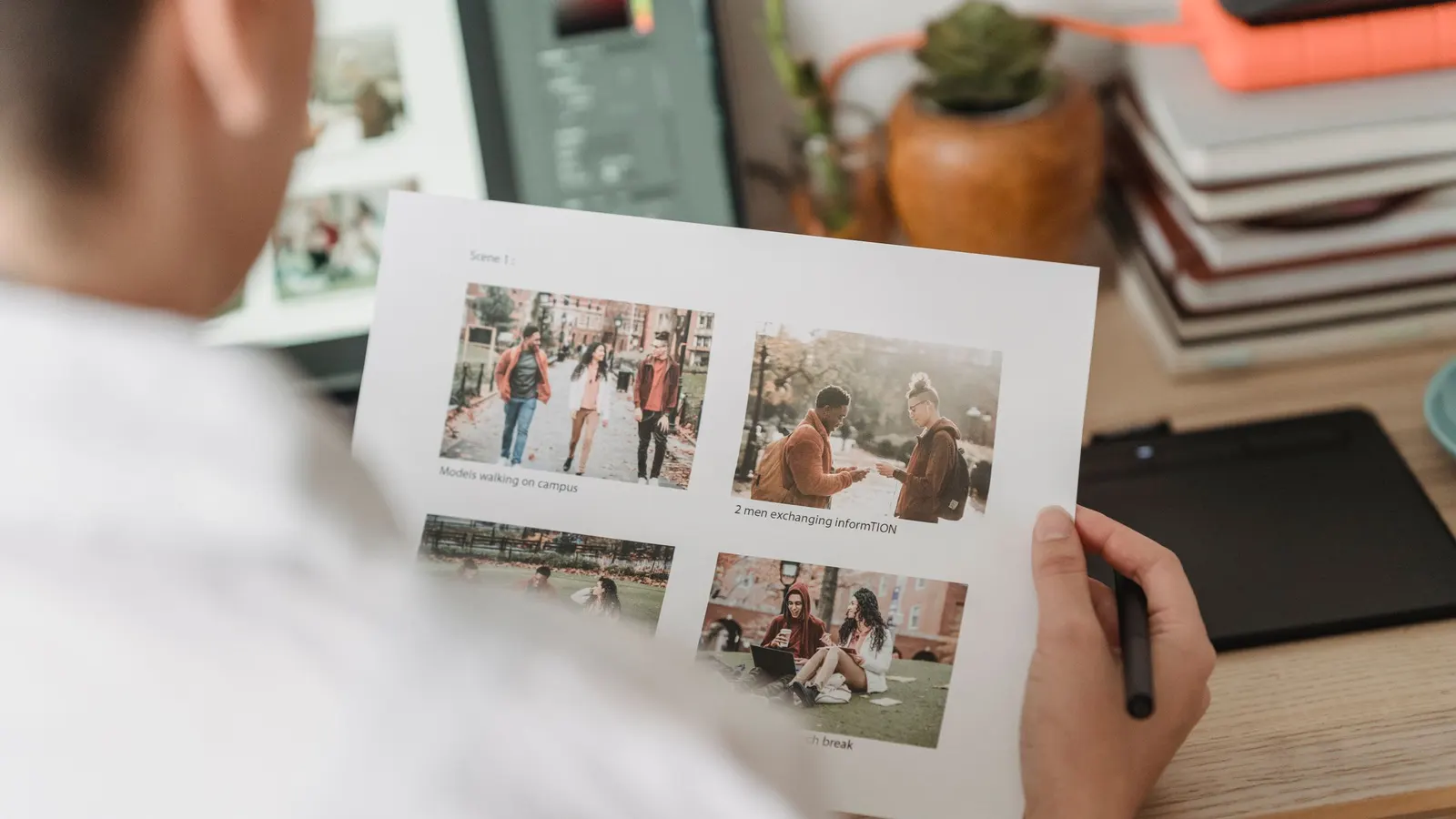
The illustrator Loish says artists now get accused of using AI even when they document every step of their process (Kotaku, October 2026). At the end of 2022 the artist Ben Moran was banned from Reddit's r/Art after a moderator decided a painting was AI-made, though Moran had the Photoshop files and sketches to show it wasn't (PC Gamer).
Jason Allen's Midjourney image won the digital art category at the 2022 Colorado State Fair (CBS). The US Copyright Office refused to register it as submitted, because Allen wouldn't disclaim the AI-made parts, though he says he entered at least 624 prompts (Review Board decision, 2023). Allen sued over the refusal, and the court hadn't decided the case as of the docket's last entry (Allen v. Perlmutter, June 2026). In Thaler v. Perlmutter, where Stephen Thaler had named his AI system as an image's sole author, the DC Circuit ruled that a machine can't be the author (DC Circuit, March 2025), and the ruling stands: the Supreme Court declined to hear the case (March 2, 2026). The Copyright Office's view is that, with today's tools, prompts alone don't make you the author (Copyright Office, January 2025).
A photo contest got it wrong with a real picture, too. Photographer Miles Astray entered a real photo of a flamingo in the AI category, where it took third place and the People's Vote, and he was disqualified once he said it was real (CBS, June 2024).
Signed records of where a photo came from are one answer. Google's Pixel 10 phones add one, called Content Credentials, to every JPEG photo taken with the Pixel Camera app (Google, September 2025). What such a record can and can't prove is in how AI detection works.
Can people still spot AI images?
Often not, and feeling sure is no guide.
| Study | Who | Result |
|---|---|---|
| PNAS, 2022 | 315 online participants, AI faces made with StyleGAN2 | 48.2% right, where chance is 50%. A separate group of 223 rated AI faces more trustworthy than real ones, 4.82 against 4.48 |
| University of Reading, 2025 | 664 people, AI faces | People with typical face recognition spotted fakes 31% of the time, where chance is about 50%; 51% after about five minutes of training |
| Microsoft, 2025 | About 287,000 answers from 12,500+ quiz players | 62% right; best on portraits, worst on nature and city scenes |
| Northwestern, 2025 | 50,000+ quiz players | 76% of AI images and 74% of real ones; on AI images, 72% after one second and 80% after ten |
In a 2026 study, people with average face recognition did only slightly better than chance at spotting AI faces, yet participants stayed confident even when their results didn't back that up (UNSW Sydney). Meanwhile the supply keeps growing: Google says people made more than 5 billion images with its Gemini image tool, nicknamed Nano Banana, by October 2025 (Google).
In the UK, 43% of people aged 16 and over told Ofcom they'd seen at least one deepfake online, an image, video or audio clip, in the previous six months, and fewer than one in ten (9%) felt confident they could spot one (Ofcom, July 2024).
How can you protect yourself from fake AI images?
Check where a picture came from before you share it or send money because of it.
| If this happens | Do this |
|---|---|
| A dramatic news photo | Find who took it, and compare what it shows with other reports of the same event (AP) |
| Someone you met online asks for money | Don't send it, whatever photos they show you (FBI) |
| A relative calls asking for money, and the voice could be AI-cloned | Ask for the secret word you agreed on as a family, and listen for odd tone or word choice (FBI) |
| A reverse image search finds nothing | Keep checking where it came from; the Pitt case above shows why. Searching with an image means uploading it to Google (Google Help) |
| You come across a sexual image of a child, real or AI-made | Report it to NCMEC's CyberTipline in the US or to the IWF in the UK, which takes AI-made images too |
| After you've reported it | Delete any copy or link you saved and don't go back to check it's gone. If a child is in danger now, call the police (IWF FAQ) |
| A sexual image of you from before you were 18, on your device | NCMEC's Take It Down service makes a fingerprint of it on your device and doesn't upload the image; don't download or share one to submit it (Take It Down) |
| A sexual image or deepfake of you as an adult | Report it to the platform; if you have the image, StopNCII.org fingerprints it on your device; ask Google to remove fake sexual images from its search results; tell the FTC if a US platform misses the 48-hour deadline |
| You think someone's photo or art is AI | Look for the original, other angles or their working files before you say so |
Labels help a little. Pinterest shows an "AI modified" label on some image Pins (Pinterest, April 2025, checked November 2026), and 73% of US teens want AI-generated content clearly labeled or watermarked (Common Sense Media, 2025).
How can LeanImg's AI image detector help?
Our AI image detector gives you a second opinion on one picture for free. It helps most when you have the original file.
It reads what the file says about itself first: its Content Credentials, AI labels, generator settings and the hidden ChatGPT and Gemini watermark patterns, and when none of that settles it, an AI model estimates how likely the image is AI-made and shows a heatmap of where it reacted (detector FAQ). It runs in your browser tab, so the image isn't sent anywhere, and the first check downloads the model once, about 126 MB (detector FAQ).
| Before you... | Check this | What the detector can tell you |
|---|---|---|
| Share a news photo | The original file, if you can find it | Whether its Content Credentials or a hidden ChatGPT or Gemini watermark says AI. A screenshot has lost the credentials, and the detector finds Gemini's watermark only on an untouched file (detector FAQ) |
| Trust a dating profile | Their photos | Only the watermark check and an estimate, if an app re-saved the photo and stripped its labels. Real photos re-sent through chat apps are the ones it most often scores high, so treat the score as a hint (detector FAQ) |
| Pay for a rental or a product | The original listing photos | A camera's Content Credentials show "Taken with a camera" next to the estimate. It can't show which part of a photo was edited (detector FAQ) |
| Buy art or post your own | The image file | Whether the file says it was made with AI and which company signed it; if it says nothing, the estimate and heatmap (detector FAQ) |
| Accuse someone of using AI | The original file | An estimate alone isn't proof. A credential from a known company is stronger evidence (detector FAQ) |
It's wrong sometimes, in both directions. In our October 2026 test it caught 110 of 114 AI originals (3 of the 4 it missed were deepfakes) and rated 3 of 69 original real photos 50% or more likely to be AI (detector FAQ). On AI images shrunk and recompressed the way a chat app sends them, the model on its own caught 79 of 114 (detector FAQ). It checks still images only and can't prove a picture is real (detector FAQ). To check for a Google or OpenAI watermark, use Google's SynthID Detector or OpenAI's verification page; both ask you to upload the file. The checks you can do yourself are in how to tell if an image is AI generated.
Questions people ask
What is a deepfake?
An AI-made fake meant to pass as real. Ofcom's definition covers videos, pictures and audio clips (Ofcom).
What is the purpose of AI detectors?
To flag likely fakes for a closer look. Reuters runs several detectors and says they aren't foolproof (Reuters). Our test results are in how AI detection works.
How to recognize AI scams?
By what they ask for. The FBI's advice is never to send money, gift cards or crypto to people you've only met online or over the phone (FBI). Table 7 has what to do when a "relative" calls.