How does AI detection work? What a score can and can't say
AI detection reads a mark some AI makers hide in words or pixels, or estimates how machine-made content looks, and that estimate can be wrong.
15 min de citit
Pe această pagină
AI detection works two ways: it reads a mark some AI makers hide in words or pixels, or estimates how machine-made content looks. The percentage an essay checker shows is that estimate, and it settles nothing on its own. A flag can leave a student's results withheld for months, and Turnitin says its report shouldn't be "the sole basis for adverse actions" (ABC News via RNZ, October 2025).
How do AI detectors work?
For essays, AI detection works by measuring how predictable the wording is: an AI model reads the text and checks how expected each word was (one 2023 method). The other kind of detection reads a mark. Some AI makers hide one in the words or pixels their tools produce, and a checker that knows the mark can find it (Google DeepMind).
Only some AI makers add a mark, so for everything else an estimate is all a checker can give. An estimate comes out as a probability, so it's a lead to follow up.
Do AI detectors use AI? The estimating kind does. Some run a classifier trained on human and AI writing, as OpenAI did in 2019. OpenAI's 2019 report warned that once AI text gets good enough, "content-based detection methods would be insufficient". So look for a mark first and read an estimate last.
| Method | Kind | Works on | What breaks it |
|---|---|---|---|
| Content Credentials (C2PA) | Mark, signed | Images, video, audio | The signed record can be stripped from the file. It shows where a file came from; whether the scene is true is another question (C2PA) |
| AI label in the metadata | Mark | Images | It's a plain field (IPTC), so anyone can edit or strip it |
| Invisible watermark (SynthID, Meta's Video Seal) | Mark | Images, video, audio | Only finds a mark the maker added when the file was made (Google DeepMind); at launch, Gemini's check covered Google's own AI (Google) |
| Text watermark (SynthID Text) | Mark | Text | Rewording weakens it; it covers only AI makers that use it (Nature) |
| Word predictability (perplexity, burstiness) | Estimate | Text | Rewording by another AI (lab study); plain human writing (Patterns) |
| Trained text classifier | Estimate | Text | New AI models and rewording tricks (benchmark); short texts (Turnitin) |
| Pixel classifier | Estimate | Images | Images unlike its training set, such as real-world data (benchmark); JPEG compression and image size (study) |
Is AI detection the same as a plagiarism check?
No. A plagiarism check looks for matching text in other sources, whereas an AI score estimates how much of the text a machine wrote. Turnitin's own 2023 FAQ says its Similarity score and AI writing percentage "are completely independent and do not influence each other" (Turnitin's AI writing FAQ, March 2023).
What do AI detectors look for?
Essay checkers look for writing that's predictable and even: words an AI model would have guessed and sentences that all have the same shape.
Perplexity is the predictable part. An AI model reads the text and checks how expected each word was. Turnitin says AI writing is "a little too probable, favoring repetition and unsurprising phrasing" (Turnitin, October 2023). Its vice president of AI told The Washington Post it looks for sentences that are "too consistently average" (The Washington Post via ADN).
Burstiness measures the shape: people mix long sentences with short ones, and "AI sentences tend to be more uniform," as NPR explained in 2023.
Trained classifiers just learn the difference from piles of human and AI text (OpenAI, 2019).
Turnitin narrows the text first. It scores only "prose sentences contained in long-form writing format" and "does not reliably detect" poetry, scripts or code. A positive score "suggests some percentage of the analyzed text was generated by AI" (University of Wisconsin-Superior's Turnitin guide, updated August 2026).
For a teacher or an editor, a style score says the text is plain and predictable, which some human writing is too.
Why do AI detectors flag my writing?
Because plain and predictable wording is exactly what the detectors measure, and some human writing reads that way.
In a 2023 study in the journal Patterns, seven detectors wrongly flagged 61.3% of 91 essays by non-native English writers on average, and all seven agreed on 19.8% of them, while essays by 88 US eighth-graders were classified accurately. Enriching the vocabulary of the non-native essays cut the false flags sharply, and it worked the other way around too: simplifying the eighth-graders' words made their false flags rise substantially. The authors warn that detectors "might inadvertently penalize non-native writers who use a more limited range of linguistic expressions" (Patterns, July 2023).
Turnitin's own test found that gap "small, and not statistically significant" on texts above its minimum length. It also notes the study used short essays and didn't test Turnitin (Turnitin, October 2023). That's a vendor grading its own homework.
Educational technology experts told The Washington Post that the software may harm students, "particularly nonnative English speakers or basic writers" (The Washington Post via ADN).
| Factor | What the evidence shows | Source |
|---|---|---|
| Non-native English, plain vocabulary | 61.3% of TOEFL essays (an English test for non-native speakers) wrongly flagged, averaged over seven detectors; 11.6% after richer vocabulary | Patterns, lab study, Jul 2023 |
| Short text | Turnitin raised its minimum from 150 to 300 words | Turnitin, May 2023 |
| Opening and closing sentences | Wrong flags are more common in the first and last few sentences | Turnitin, May 2023 |
| Next to real AI text | 54% of wrongly flagged sentences sit right beside AI-written ones | Turnitin, May 2023 |
Are AI detectors accurate?
Do AI detectors actually work? The best ones catch most long AI text, but they slip on short, reworded or plain writing, so a score can't prove who wrote something. In a September 2025 working paper by two University of Chicago Booth researchers, two of three commercial detectors caught nearly all the AI-written passages and the third missed 10% to 40%, depending on the AI model. All three "lost accuracy on passages under 50 words" (Chicago Booth Review). Rewording by another AI fools many detectors (lab study, 2023) and plain human writing gets flagged more often (Table 2).
The Booth paper is the most recent test we know of. It didn't cover student essays, and its authors warn of a "technical arms race" between detectors and the tools that reword AI text (Chicago Booth Review).
Can AI detectors be wrong? Yes. OpenAI pulled its own text classifier in 2023 for its "low rate of accuracy" (Decrypt).
Are AI detectors reliable?
Not the ones that estimate, at least not enough to decide a case alone. Such a detector turns a probability into a yes or no at some line, and moving it trades missed AI for wrongly flagged people (Chicago Booth Review), so an accuracy figure means little without its false-flag rate. It works like a beach metal detector, more or less: set it sensitive enough to catch every ring and it beeps at every bottle cap too.
One research method held to a very low false-flag rate still caught most ChatGPT text in its authors' test (2024 paper). A different detector at a looser line caught far less once another AI had reworded the text (2023 study). Both results are in Table 3.
Then there's the size of the pile. A small false-flag rate times thousands of honest papers is still a lot of wrongly flagged students, and Vanderbilt University did that sum before switching Turnitin's detector off (Vanderbilt, August 2023). Images have the same problem: our own AI image detector gives some real photos a middle score (Table 4).
Treat a score as a reason to ask questions. Turnitin says to use its result to "initiate a conversation" with the student (Turnitin, June 2023).
| Detector or study | AI caught | Human work wrongly flagged | Source |
|---|---|---|---|
| OpenAI's text classifier, its own test | 26% | 9%; withdrawn in July 2023 | Decrypt, 2023 |
| Turnitin, 800,000 papers written before ChatGPT | Not measured | Under 1% of documents it scores over 20% AI; about 4% of flagged sentences | Turnitin, May 2023 |
| Turnitin, lab test | About 85% | 1%, the line it was set to | Turnitin's figures, per Siena College |
| Turnitin's 1% on Vanderbilt's 75,000 papers from 2022 | n/a | About 750 papers | Vanderbilt, Aug 2023 |
| Method comparing two AI models, ChatGPT text | Over 90% | 0.01% (a target rate the authors chose; the cut-off was set on each test set to hit it) | Authors' lab test, Jan 2024 |
| Predictability detector, before and after an AI reworded the text | 70.3% before, 4.6% after | 1%, set in advance | Lab study, Mar 2023 |
| 3 commercial detectors, about 2,000 human passages plus AI versions | 96-100% for two; 60-90% for the third; all three less accurate on passages under 50 words | Under 1% for all three | Chicago Booth Review on a Sep 2025 working paper |
| 1 open-source detector, same texts | Close to "random guessing" in many cases | Not given | Same Booth Review article |
How do AI image detectors work?
AI image detectors use the same two kinds of signal as text checkers: a mark in the file, if the maker left one, and an estimate from the pixels.
Content Credentials are a record signed by the camera or app that made or edited the file, so tampering shows (C2PA explainer). A valid one from a source you trust is strong evidence of where a file came from. A missing one tells you nothing, because adding one is optional and it can be stripped from the file. That's why the standard also lets a hidden watermark or fingerprint find a stored copy of the record.
An AI label in the metadata is a plain text field written into the file, so anyone can edit it (IPTC).
Google DeepMind's SynthID, for example, builds an invisible watermark into an image the moment it is made; people can't see it, but SynthID's own checker can find it (Google DeepMind). The Gemini app checks for Google's SynthID (Google, November 2025), which Google says OpenAI and Kakao are adopting as of May 2026 (Google). Our guide on how to tell if an image is AI generated covers which checker reads which mark.
A pixel classifier is a model trained on real and AI images that gives a probability. Detectors that did well in the lab suffered "significant performance drops on real-world data" in a NeurIPS 2025 benchmark (benchmark paper).
LeanImg's free AI image detector uses both kinds. It reads an image's Content Credentials, AI labels and the hidden ChatGPT and Gemini watermark pattern first, and only when none of them settles it does an AI model give a percentage estimate. Everything runs in your browser, so the image never leaves your device. Like every detector it can be wrong, and it can't prove a picture is real.
We also tried in-browser models that mark which parts of a photo were edited. The best one found about 9% of edits while leaving 95% of untouched photos unmarked, so our tool doesn't use one and won't say "AI-edited" unless the file records the edit. Table 4 shows how the rest of the tool did in our own test.
| Test | Checks used | Result |
|---|---|---|
| 114 AI images, originals | File check, then the model | 110 caught, 4 missed |
| The same AI images re-saved like a chat app copy (1600 px, JPEG quality 70) | Model only | 79 of 114 caught |
| Grok originals with their Content Credentials ignored | Model only | 16 of 19 caught |
| 69 real photos, originals | File check, then the model | 3 scored 50% or more; 10 landed between 25% and 75%, the band labeled "Some signs of AI" |
Looking at a viral photo? Check it for Content Credentials first. A bare pixel score is a reason to trace where the picture came from.
Why is AI detection important?
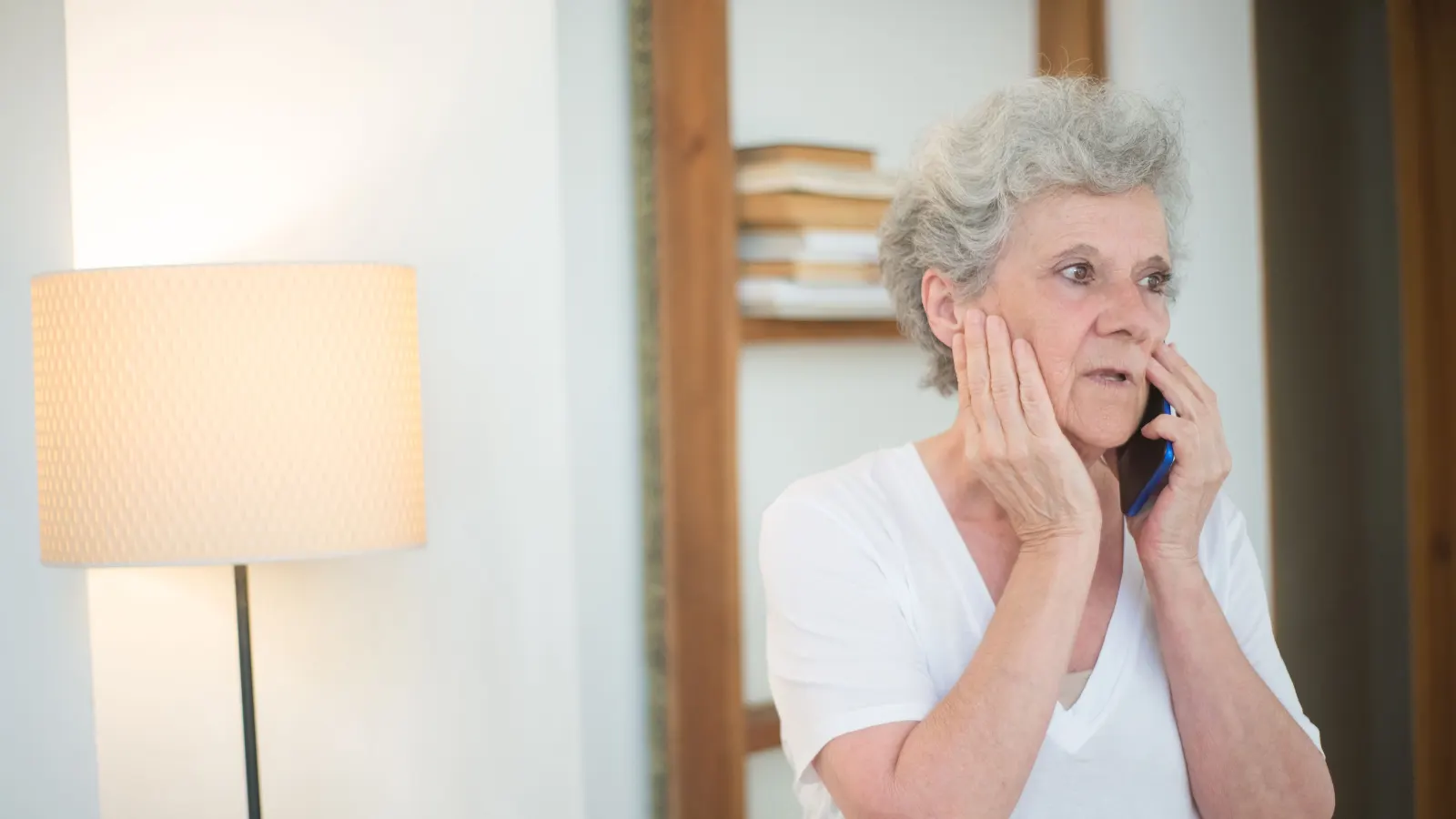
Because fakes now cost people real money and target voters, and many Americans aren't confident they can tell (Table 5).
Getting it wrong the other way hurts too. Law professors Bobby Chesney and Danielle Citron called it the liar's dividend: once people know fakes exist, "a skeptical public will be primed to doubt the authenticity of real audio and video evidence" (California Law Review, 2019). False labels do damage of their own. In 2024 Meta renamed its "Made with AI" label to "AI info" after small edits made with AI tools, such as retouching, had set it off (Meta).
So spotting a fake means checking where it came from. In a July 2026 warning about scammers, the FBI says AI content "is often difficult to identify" and advises checking a surprising video or image "through reputable news sources or known official channels" (FBI, July 2026). Before you act on a call or a video, confirm the person through a channel you already trust.
| Case | Number | Source |
|---|---|---|
| Arup, Hong Kong: a video call with a deepfaked CFO | About US$25.6 million sent in 15 transfers | Fortune, May 2024 |
| New Hampshire primary robocalls with a fake Biden voice | 9,581 calls; a $6,000,000 FCC fine; a jury later acquitted the organizer on state charges | FCC, Sep 2024; CBS News, Jun 2025 |
| Clarkesworld magazine | About 500 machine-written stories next to 700 real ones before it closed submissions | NPR, Feb 2023 |
| Young people aged 13-20 | 1 in 17 had deepfake nudes made of them | Thorn, Mar 2025 |
| US adults | 76% say telling AI-made from human-made content is very or extremely important; 53% aren't confident they can | Pew Research Center, Sep 2025 |
Fakes are also why platforms and lawmakers now ask for labels. YouTube, TikTok and Meta's apps ask you to disclose realistic AI video you post, and on some, realistic images or audio too (YouTube Help; TikTok; Meta, February 2024). In the EU, AI makers must mark what their tools produce, and California makes them offer a free checking tool (Table 6).
In the EU, the duty to disclose that a deepfake is AI-made falls on the deployer, meaning whoever uses the AI system (AI Act, Article 50), and the Act's definition of deployer leaves out use "in the course of a personal non-professional activity" (AI Act, Article 3). The European Commission's Code of Practice on labeling AI content, published 10 June 2026, is voluntary (European Commission).
| Rule | Who must act | What it requires | Applies from | Source |
|---|---|---|---|---|
| EU AI Act, Article 50(2) | AI providers | A machine-readable mark on AI audio, images, video and text | 2 Aug 2026; 2 Dec 2026 for systems on the market before 2 Aug 2026 | Article 50; Article 111; Article 113 |
| EU AI Act, Article 50(4) | Businesses and others publishing a deepfake in their work | Disclose it's AI; lighter for evidently artistic or satirical work | 2 Aug 2026 | Article 50; Article 113 |
| California AI Transparency Act, as amended by SB 1000 (2026) | Anyone who makes a generative AI system publicly accessible in California | A free disclosure verification tool (called an "AI detection tool" until SB 1000, an urgency law signed 30 September 2026, renamed it) | 2 Aug 2026 | SB 1000 via CalMatters |
| Same act, as amended by AB 853 (2025) | Large online platforms | Detect provenance data, show users whether it marks content as AI-made or camera-captured, and not strip it; AB 2713 (2026) revised these duties | 1 Jan 2027 | AB 853 via CalMatters; AB 2713 via CalMatters |
Do colleges use AI detectors?
For coursework, some do. The college cases we found mostly involve Turnitin's AI indicator, which Vanderbilt and Australian Catholic University switched off. For applications, many colleges have students certify they haven't used AI unethically (AP via Fortune, December 2025), and the Common App and Yale policies in Table 7 don't mention a detector.
Part of the cost lands on students who did nothing wrong (Table 7). At Texas A&M University-Commerce in 2023, an instructor asked ChatGPT whether it wrote his students' essays. ChatGPT isn't a detector, and the university later said several students were exonerated (The Washington Post via ADN). Colleges that keep the tool say a score isn't enough: the University at Buffalo says instructors "must have additional evidence that a student used AI" (GovTech, May 2025).
If you're a student or you run a course, the drafts and version history carry more weight than the number.
| Where | What happened | Source |
|---|---|---|
| Common App (applications) | Fraud policy has restricted "substantive" AI use since August 2023; member colleges judge honesty | CalMatters, Oct 2023 |
| Yale (applications) | AI's "substantive content" counts as application fraud; AI grammar and spelling checks don't | Yale Admissions, checked Nov 2026 |
| Vanderbilt University (coursework) | Switched off Turnitin's AI detector (sum in Table 3) | Vanderbilt, Aug 2023 |
| Australian Catholic University (coursework) | Nearly 6,000 misconduct cases in 2024, about 90% AI-related; one student waited six months to be cleared; dropped Turnitin's AI tool in March 2025. The university calls the figures "substantially overstated" | ABC News via RNZ, Oct 2025 |
| University at Buffalo (coursework) | Turnitin's AI detection flagged a group of graduate students; more than 1,100 people signed a petition asking UB to stop using it, and the student who started the petition says she was cleared | GovTech, May 2025 |
| US K-12 public school teachers, 2023-24 | 68% use an AI detector regularly; 64% say students at their school got in trouble over AI; 52% trust students' work less | CDT, Mar 2024 |
Questions people ask
Is 40% AI detection bad?
It's a reason to ask questions, and on its own it proves nothing. On Turnitin the number is an estimate: the score is "an average of these segment scores" over overlapping chunks of the text, "a 50% score does not mean exactly 50% of the text was generated by AI" and "a high score does not definitively prove AI was used" (University of Wisconsin-Superior's Turnitin guide, updated August 2026). Turnitin says its report shouldn't be "the sole basis for adverse actions" (ABC News via RNZ, October 2025). Ask which sentences were flagged and look at the drafts.
Is 20% AI detection bad?
Not by itself. It's the lowest score above zero that Turnitin shows: from 1% to 19% its reports give only an asterisk, with "no score or highlights", to avoid false positives (University of Wisconsin-Superior's Turnitin guide, updated August 2026). Turnitin first marked scores under 20% in 2023, saying that below that line "there is a higher incidence of false positives" (Turnitin, May 2023). Ask which sentences were flagged.
What is the 30% rule of AI?
No official rule. In schools it's taken to mean keeping a detector score under 30%. BGR notes it "is not defined by Turnitin" and "the threshold itself isn't a universal standard" (BGR, June 2026). At work it means AI does 70% of a task and people do the other 30%, and its origins "are hard to trace" (SlashGear, June 2026).
Is it common for AI detectors to be wrong?
It depends on the mistake. In the Booth working paper, all three commercial detectors wrongly flagged under 1% of human passages, but one missed 10% to 40% of AI text. An open-source detector was close to random guessing in many cases (Chicago Booth Review). Whoever runs a detector also picks how strict the line is, and the Booth Review notes that "some organizations will be more reticent than others" to flag human work by mistake.
What words trigger AI detection?
No single word. Turnitin describes AI writing as repetitive and unsurprising (Turnitin, October 2023) and flags it sentence by sentence (Turnitin, May 2023), so the signal sits in how whole sentences read.
What should you do if your writing is flagged as AI?
Ask for the evidence. Find out which tool was used and which sentences it flagged. Keep your drafts and version history: one Texas A&M student showed her instructor the Google Docs timestamps on her essays (The Washington Post via ADN). If the school still acts on the score alone, use its appeal route.